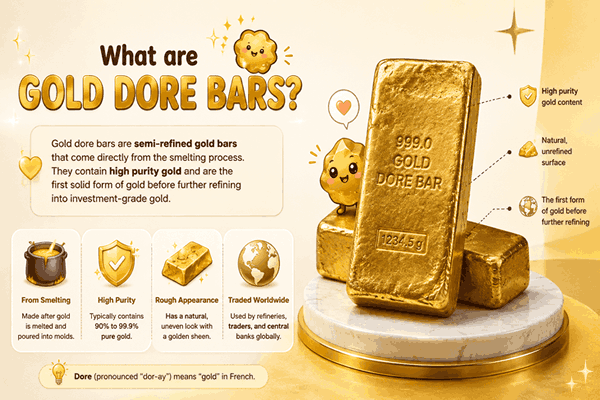
Gold dore bars are semi-pure gold bars produced directly from mining operations before undergoing final refining. They are one of the most important products in the global precious metals industry and serve as the essential starting point for the production of investment-grade gold bullion. Understanding what gold dore bars are, how they are made, and how they are traded gives investors, refiners, and international buyers a meaningful advantage when sourcing gold.
At Uganda Bullion, we work with verified suppliers and trusted industry partners to facilitate responsible gold sourcing, testing, documentation, and export procedures. Gold dore bars remain one of the most widely traded forms of raw gold in international markets, valued for their efficiency in both transportation and refining.
Definition of Gold Dore Bars
A gold dore bar is an unrefined or partially refined gold bar containing a mixture of gold, silver, and trace amounts of other naturally occurring metals. Purity varies depending on the mining source and extraction method, but typically falls somewhere between 70% and 95% gold content.
The term "dore" comes from the French word meaning "gilded" or "golden." Unlike fully refined bullion, dore bars require further processing at a specialised refinery before they can reach internationally recognised purity levels such as 99.5% or 99.99% gold.
These bars are produced by mining companies and sold to refiners, who then separate the gold from silver and other impurities using advanced refining techniques.
How Gold Dore Bars Are Produced
The production of gold dore bars begins with the extraction of gold-bearing ore from mining sites. Once that ore has been brought to the surface, it is processed through crushing, milling, concentration, and smelting to separate the precious metals from the surrounding rock.
During smelting, the gold-rich material is heated at extremely high temperatures until the precious metals melt and combine into a single metallic product. That molten material is then poured into molds, where it solidifies into dore bars.
At this stage, the bars are not yet investment-grade. They represent raw gold in its natural commercial form — the starting material that refineries will later process to meet international market standards.
Gold Dore Bar Composition
Every dore bar is unique, because its composition is shaped by the specific characteristics of the mine it came from. Typical components include:
- Gold (Au)
- Silver (Ag)
- Copper
- Iron traces
- Other naturally occurring minerals
The precise metal content is determined through laboratory testing and professional assay procedures, giving buyers an accurate picture of the material's purity and value before any purchase is made.
Why Gold Dore Bars Require Refining
Although dore bars contain significant quantities of gold, they cannot be classified as investment-grade bullion until the impurities have been properly removed. Refining is essential to reach the high purity levels demanded by financial institutions, central banks, jewelry manufacturers, and bullion investors worldwide.
Professional refineries use advanced technologies to extract the gold from the silver and other metals present in the bar. Once refined, that gold can be transformed into bullion bars, coins, jewelry, or industrial products depending on where demand lies.
Refining also delivers something less tangible but equally important: consistency, traceability, and confidence that the final product meets recognised international trading standards.
How Gold Dore Bars Are Tested
Before any transaction proceeds, gold dore bars should be subject to professional verification and assay testing. These procedures establish the exact gold content of the material and determine its fair market value.
Common testing methods include:
- Fire Assay Analysis
- XRF Spectrometer Testing
- Chemical Laboratory Analysis
- Weight and Density Verification
Independent testing protects both buyers and sellers by delivering transparent, objective purity measurements that neither party needs to take on trust.
Who Buys Gold Dore Bars?
Gold dore bars are purchased primarily by precious metal refineries, large-scale bullion dealers, international trading companies, and industrial manufacturers who need access to raw gold at scale.
Some institutional investors participate in dore transactions through specialised commodity trading arrangements. However, because dore bars require refining and careful compliance documentation, they are generally not appropriate for retail investors.
Most buyers focus their attention on purity levels, supplier reputation, export documentation, logistics arrangements, and refinery acceptance requirements before committing to a purchase.
Benefits of Purchasing Gold Dore Bars
Gold dore bars offer several genuine advantages for qualified buyers and refiners:
- Access to raw gold supply chains
- Competitive pricing compared to refined bullion
- High-volume purchasing opportunities
- Potential refining margins
- Direct sourcing from mining operations
When sourced responsibly and accompanied by proper documentation, dore bars can open up significant opportunities within the global precious metals market for buyers who know how to work with them.
Important Considerations Before Buying
Due diligence is not optional when purchasing gold dore bars — it is essential. Buyers should always verify supplier credentials, export licenses, assay reports, and compliance documentation before entering into any transaction.
It is equally important to confirm the legitimacy of transportation arrangements, insurance coverage, and refinery acceptance procedures. Working with reputable suppliers is the most effective way to reduce exposure to fraud, misrepresentation, and regulatory non-compliance — risks that are very real in this part of the market.
Professional verification services play a critical role in keeping the entire procurement process transparent and secure from start to finish.
Gold Dore Bars and International Trade
Gold dore bars form a vital link in the global gold supply chain. Many producing countries export dore to major refining centres, where the raw material is processed into high-purity bullion products destined for financial markets, manufacturers, and investors around the world.
International buyers frequently source dore bars from active mining regions where raw precious metals are available and procurement can be competitive. Successful transactions in this space depend on thorough documentation, proper export permits, rigorous compliance procedures, and secure logistics from origin to destination.
As global demand for precious metals continues to grow, gold dore bars remain an important and active part of international gold trading and refining operations.
Conclusion
Gold dore bars are partially refined gold products containing significant quantities of gold alongside silver and other trace metals. Produced directly from mining operations, they serve as the foundation for refined bullion production the world over.
Understanding their composition, testing requirements, refining processes, and trading dynamics is essential for anyone working in the precious metals industry. By partnering with trusted suppliers, conducting thorough verification, and ensuring full regulatory compliance, buyers can participate in the international gold market with genuine confidence.
Need Professional Assistance?
Uganda Bullion provides support with gold sourcing, verification, assay services, export documentation, logistics, and compliance guidance for qualified buyers worldwide.
Contact Our Team