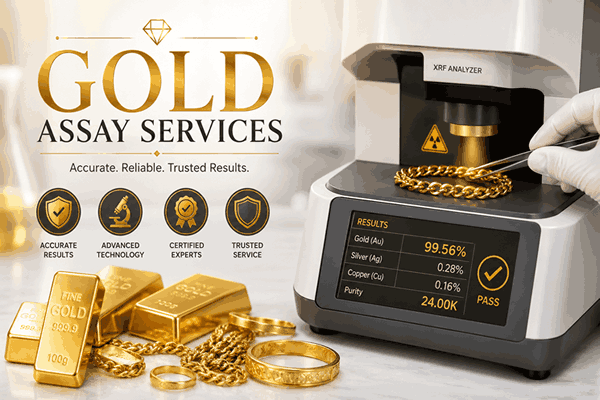
In gold trading, the difference between a good deal and a costly mistake often comes down to a single question: does the gold actually contain what the seller claims it does? Purity determines value, and value determines everything else — pricing, export documentation, refinery acceptance, and the confidence of every party downstream. Without independent verification, buyers are essentially taking someone's word for it. Professional assay services exist specifically so nobody has to.
Uganda Bullion incorporates gold assay testing and verification into our transaction process because we believe buyers deserve confirmed specifications, not stated ones. Whether you're acquiring gold bullion, bars, or doré for investment, export, or commercial use, accurate testing is the foundation that makes everything else in the transaction reliable.
What a Gold Assay Actually Tells You
A gold assay is a scientific analysis that determines exactly what percentage of a sample is pure gold and what the remainder consists of — silver, copper, zinc, other metals, or impurities. The result is expressed as a fineness figure: 999.9, 995, 916, and so on, each corresponding to a specific purity level that carries a specific market value.
That precision matters more than most first-time buyers expect. The difference between 999.9 fine gold and 995 fine gold might sound negligible until you calculate it across a kilogram or more of product — at which point a stated versus actual purity discrepancy becomes a meaningful financial gap. Professional assay testing closes that gap before money changes hands rather than after.
Why Independent Testing Protects Everyone in the Transaction
Sellers with genuinely high-quality gold should welcome independent assay testing, because it confirms what they're claiming and removes any basis for dispute. Buyers should insist on it, because the alternative is accepting a seller's own assessment of their own product — which is not how serious commercial transactions in any commodity work.
Beyond protecting individual transactions, professional assay services serve several practical functions throughout the gold supply chain:
- Confirm purity and authenticity through objective, laboratory-based analysis rather than visual inspection.
- Establish accurate market value tied to verified gold content rather than stated specifications.
- Reduce fraud and misrepresentation risk by creating a documented evidence base for every transaction.
- Satisfy export documentation requirements — assay certificates are standard components of international gold shipment paperwork.
- Give international buyers the verification their banks, insurers, and regulatory authorities require.
- Support AML and compliance standards that increasingly require product verification documentation.
- Create the transparent foundation that long-term trading relationships are built on.
How Gold Is Actually Tested
Different testing methods suit different situations, and understanding which applies to your transaction helps set appropriate expectations for accuracy, turnaround time, and documentation output.
XRF Analysis
X-Ray Fluorescence testing is the most commonly used method for initial evaluation and transaction verification. It's fast, non-destructive — meaning the sample isn't altered in the process — and produces results quickly enough to inform real-time decisions. XRF is widely used for verification at the point of purchase or export, where speed and convenience matter and the margin for error in the result is acceptable for the purpose at hand.
Fire Assay Testing
Fire assay is the gold standard of gold testing — deliberately chosen phrasing. It's the most accurate method available, involving a controlled smelting process that physically separates and measures the gold content of a sample with a precision that XRF cannot match. Fire assay results carry the most weight with refineries, official certification bodies, and institutional buyers who require the highest confidence level in purity verification. For large commercial transactions, official export certification, or situations where the margin between purity levels affects significant value, fire assay is the appropriate choice.
Chemical and Spectroscopic Analysis
Advanced laboratory techniques can identify trace elements and characterize the full composition of a precious metal sample in detail. These methods are used when a more complete elemental profile is needed — for example, when a refinery wants to understand the exact composition of a doré bar before processing it, or when regulatory requirements call for detailed provenance analysis.
Who Needs Assay Services — and When
The honest answer is that anyone exchanging significant value for gold should have independent verification before the transaction closes. In practice, the clients who rely most on professional assay services include:
- International buyers who cannot physically assess the product themselves and need documented verification they can present to their banks and importing authorities.
- Gold exporters whose shipments require assay certificates as part of the standard export documentation package.
- Mining companies establishing the value of production for sale or export purposes.
- Traders and brokers whose own credibility with clients depends on providing verified product specifications.
- Investors purchasing physical bullion who want confirmation that what they're holding matches what they paid for.
- Refineries assessing incoming feed material to determine processing yield and purchase price.
- Regulatory and government bodies overseeing royalty assessment, export authorization, or market oversight.
Assay Documentation and Export Compliance
Assay certificates aren't just useful — for international gold exports, they're typically required. Customs authorities use them to verify declared values and product specifications. Banks processing international payments reference them during compliance checks. Receiving parties on the import side use them to confirm that the shipment matches the purchase agreement before accepting delivery.
An assay certificate that's prepared correctly, references an accredited testing methodology, and aligns precisely with the other documents in an export package travels cleanly through customs and banking processes. One that's missing information, references a non-standard testing method, or conflicts with the commercial invoice creates exactly the kind of documentation inconsistency that holds shipments up.
Uganda Bullion coordinates assay documentation as part of our broader export compliance process, ensuring that testing results are properly formatted and integrated into the complete documentation package rather than treated as a separate add-on.
Choosing a Gold Assay Provider: What Actually Matters
Not all assay services are equal, and the credibility of a result depends heavily on who produced it and how. When evaluating assay providers, the factors that actually matter are: accreditation status and the recognized testing standards they operate under; the specific methods used and whether those methods are appropriate for the transaction type; the quality and completeness of their reporting; their independence from the seller; and whether their certificates are accepted by the refineries, banks, and customs authorities you'll be presenting them to.
A cheap or convenient assay that produces a certificate nobody downstream recognizes hasn't solved the verification problem — it's just added a document to the file. Buyers should ask upfront whether an assay provider's certificates are accepted in their destination market and by their receiving refinery or institution before committing to that provider.
For Investors: What Assay Testing Means for Your Holdings
Physical gold investors are holding an asset whose value is directly tied to its purity — not its appearance, not its weight alone, but the verified gold content within that weight. An unverified bar in a vault is only as valuable as the trust you're placing in whoever told you what it contains. An assayed bar with documented specifications is an asset you can sell, pledge, or transfer with confidence because its value can be independently confirmed by any buyer.
That difference matters especially when markets move and you need to act quickly. Verified, documented gold transacts faster and at better terms than gold whose specifications have to be established before a buyer will proceed.
Transparency Is the Point
Uganda Bullion's commitment to gold assay services comes from a straightforward conviction: transactions built on verified information go better for everyone involved than transactions built on claims. Buyers get what they paid for. Sellers get fair value for what they're offering. Documentation satisfies compliance requirements without scrambling. And the trading relationship that results is one where both parties have reason to come back.
If you have questions about our assay procedures, what testing methods we use for specific product types, or how assay documentation integrates with our export process, talk to our team directly.